WORKING TITLE
by Sidney Mullis
Last summer, I left Pittsburgh for a teaching job in Virginia at the university where I had been an undergraduate student twelve years earlier. Almost immediately, I began to recall the eighteen-year-old version of myself who had first arrived there. Being back on campus felt like greeting the ghost of Sidney past, someone I couldn’t entirely remember but who also wasn’t going away.
Now, during faculty meetings, I sit in rooms where I had performed naked as a nineteen-year-old and think about the number of selves I had tried on as a student. Twelve years later, I am back in those same spaces, this time as the teacher.
The idea of growing up has occupied my studio practice for a long time now. Much of my employment as an adult has involved teaching, placing me in the middle of those who are actively becoming. I am fascinated by the developmental thresholds we pass through as we age into bona fide adults, and by how much of our earlier selves we forget, leave behind, or tamp down as we put on the convincing costume of adulthood: responsibility, competence, independence, authority.
Since 2017, I have been making my own paper pulp from children's construction paper and gravestone dust, using it to build sculptural environments. With the ghost of Sidney-the-college-student was still trailing alongside me, I became curious about other artists who were pushing paper into sculptural space and whose relationships to material felt adjacent to my own. I knew their work, but I didn't know them. So I started reaching out.
I began these artist conversations thinking about paper: its fragility and strength, its ability to hold form, and its capacity to be broken down and made into something else. But this material investigation quickly shifted to a conceptual one. Again and again, I found myself talking with these artists about the idea of regeneration. Images emerged through darkness, materials were dissolved and recast, muslin molds became sheets of paper, and discards became the beginnings of new worlds. I hadn’t set out to interview artists about regeneration, but after a year spent returning to the place where I had first learned to become an artist, perhaps I was especially attuned to practices that asked what we carry forward, what we let go of, and what becomes possible with the permission to begin again.
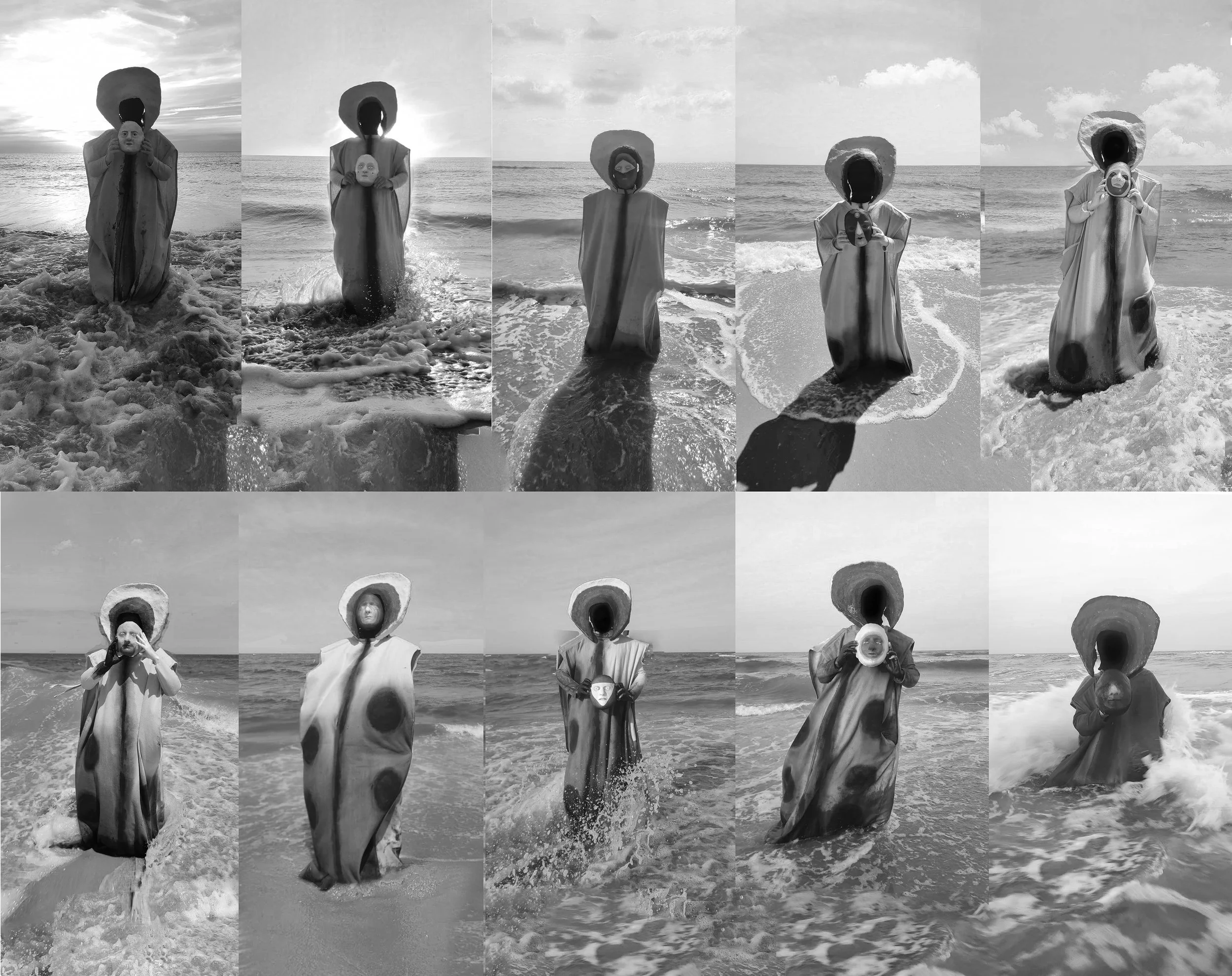
I first encountered Sadie Sheldon’s solo exhibition Dust from the Devil’s Tongue at VisArts in Richmond, VA. An unexpected return to the darkroom after more than twenty years had become the conceptual framework for her show that gradually emerged through darkness. I cold-emailed Sheldon after seeing the show, and she invited me to her studio as she was packing for her next residency at Golden Artist Colors in New York. In our conversation, darkness was not an absence, but a generative condition: a place where images, memories, and previous versions of the self could slowly reappear in altered forms, as if something has to disappear from view before something else can emerge.
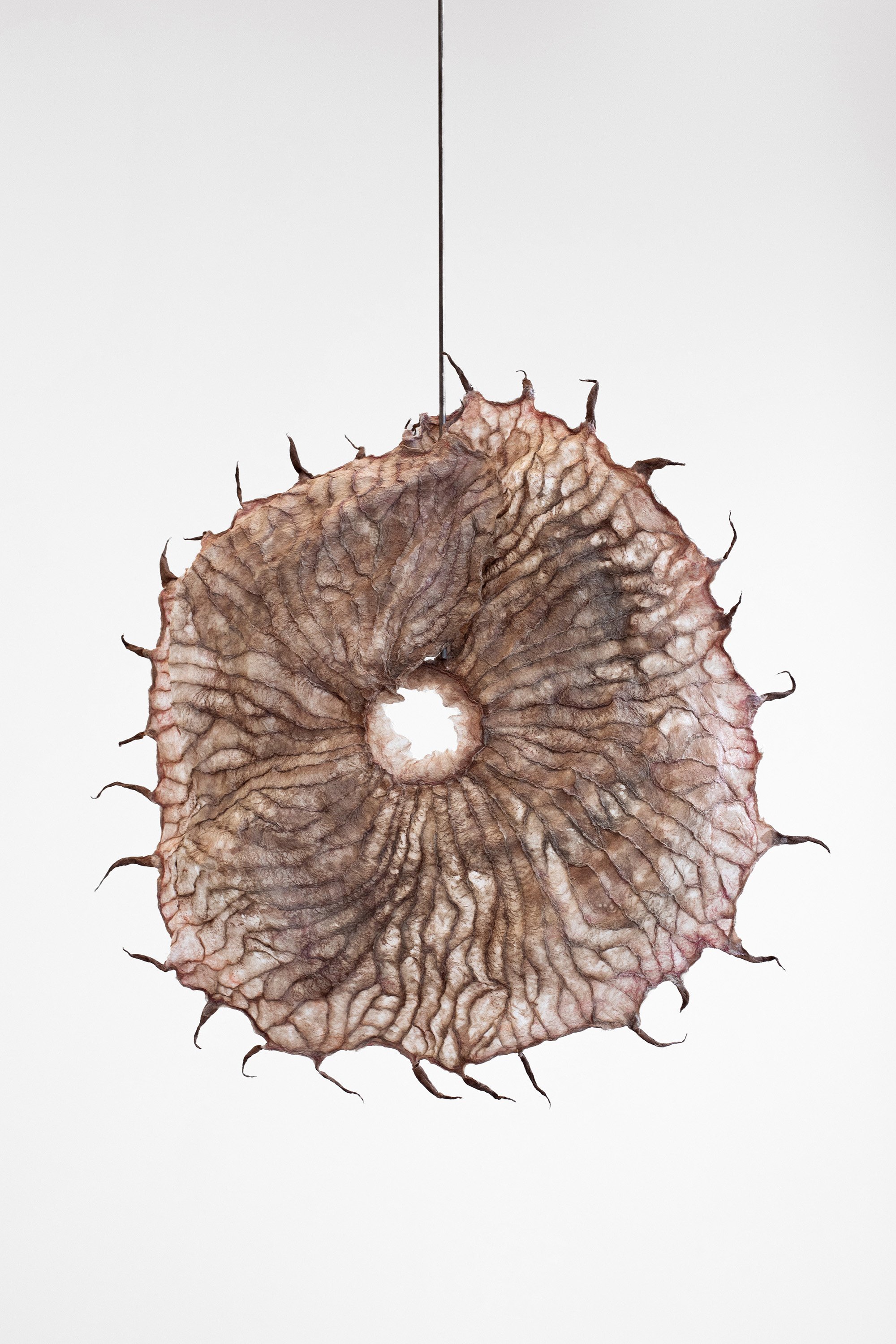
Isabella Whitfield often resists letting an ending remain an ending. I met Whitfield virtually while she is a Core Fellow at Penland School of Craft. Across her recent exhibitions, handmade paper sculptures are often dissolved, rehydrated, and cast again, while her installations continually shift in response to the exhibition spaces that temporarily hold them. Her practice asks what happens when an artwork is understood not as a final object but as one moment in a longer material lifespan.
I met Mia Brown-Seguin as she was finishing a residency at Contemporary Craft in Pittsburgh and waiting to learn where she might go next. Her large, hollow handmade paper sculptures hover somewhere between seeds, pods, vessels, and imagined botanical specimens. When the muslin molds that had supported years of these sculptures accumulated in her studio, she cut them apart, pulped them, and transformed them into 866 blank sheets of paper. Our conversation moved from this material transformation toward questions of movement, home, and the search for a new landing ground.
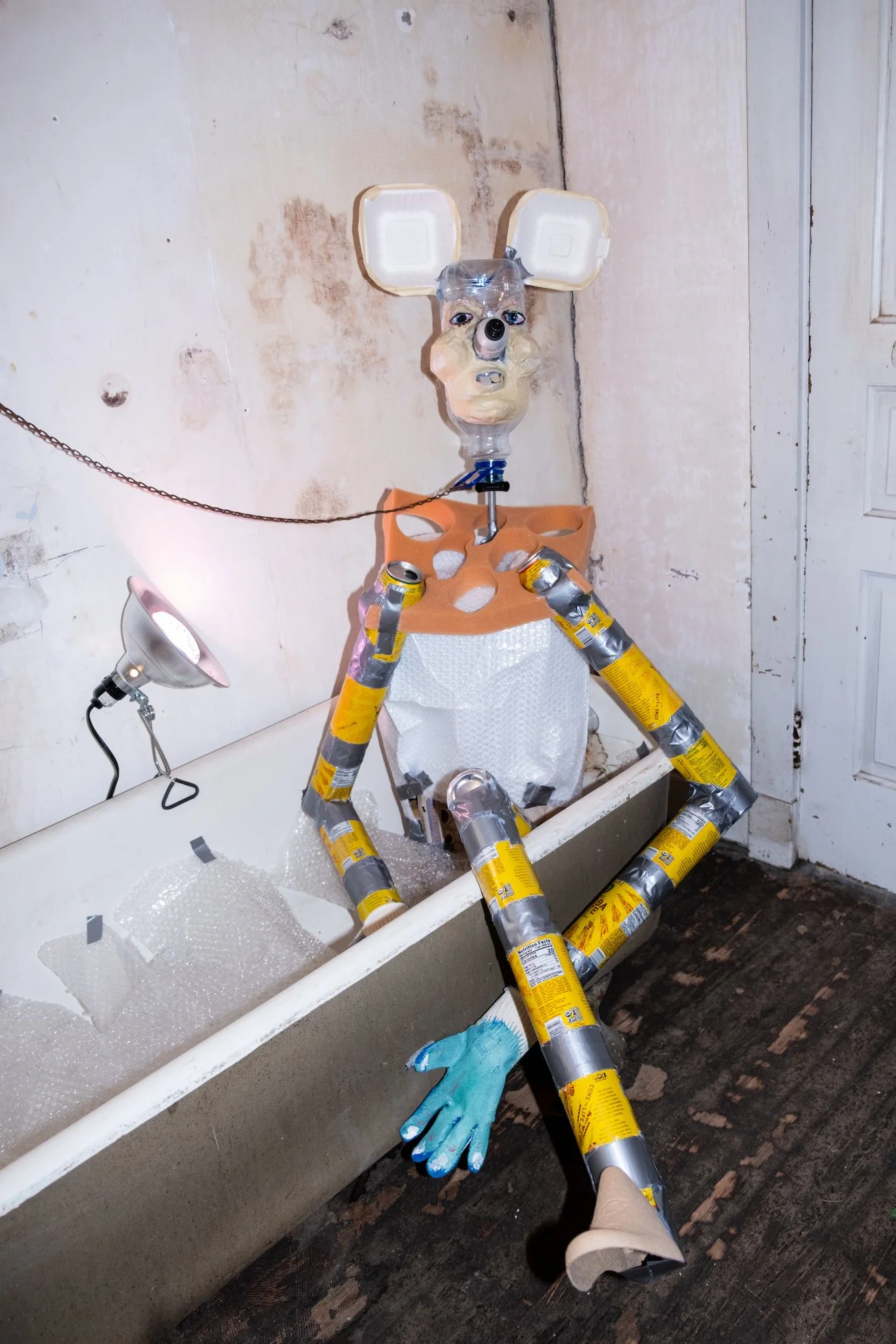
Lastly, Isabella Schubert-Jones begins with what other people have already decided is finished. I met Isabella shortly after she moved into a new Pittsburgh studio following her Distillery residency at Brew House Arts. Working with trash and discarded materials, she builds sculptures, characters, photographs, videos, performances, and immersive worlds through a process that is fast, instinctual, playful, and deliberately open to change. Scavenging for trash has given her something unexpectedly expansive: the knowledge that she will never run out of material. In a world increasingly organized around scarcity and uncertainty, waste becomes a strange source of abundance and the permission to keep experimenting and beginning again.
Across these four conversations, I began to think differently about endings. When the structure of a practice is cyclical, very little is wasted and very little is finished. Materials are reconfigured, scavenged, picked back up, repaired, and set back out for a new life. Something keeps coming back. Perhaps this was always going to be what I found during a year spent with the ghost of a younger self.
Interviews