
William Matheson
My work centers on the immaterial and the spectral, with elements such as sunlight, shadows, and smoke. These subjects are both firmly part of the everyday, but can also easily shift their identity into the realm of the uncanny and menacing. I see my paintings functioning as small stages—tightly framed spaces that hold a wide range of imagery, spanning from the deeply personal to the collective, and from the mundane to the horrific. My work is typically small-scale, created with oil paint on panels, a surface that emphasizes detail and solidity, allowing for physical interventions like scraping and sanding. I use thin washes of paint and tools like scrapers and rags to build the surface, leaving earlier layers partially visible. This process creates a sense of ambiguity, shifting between the familiar and the uncanny.
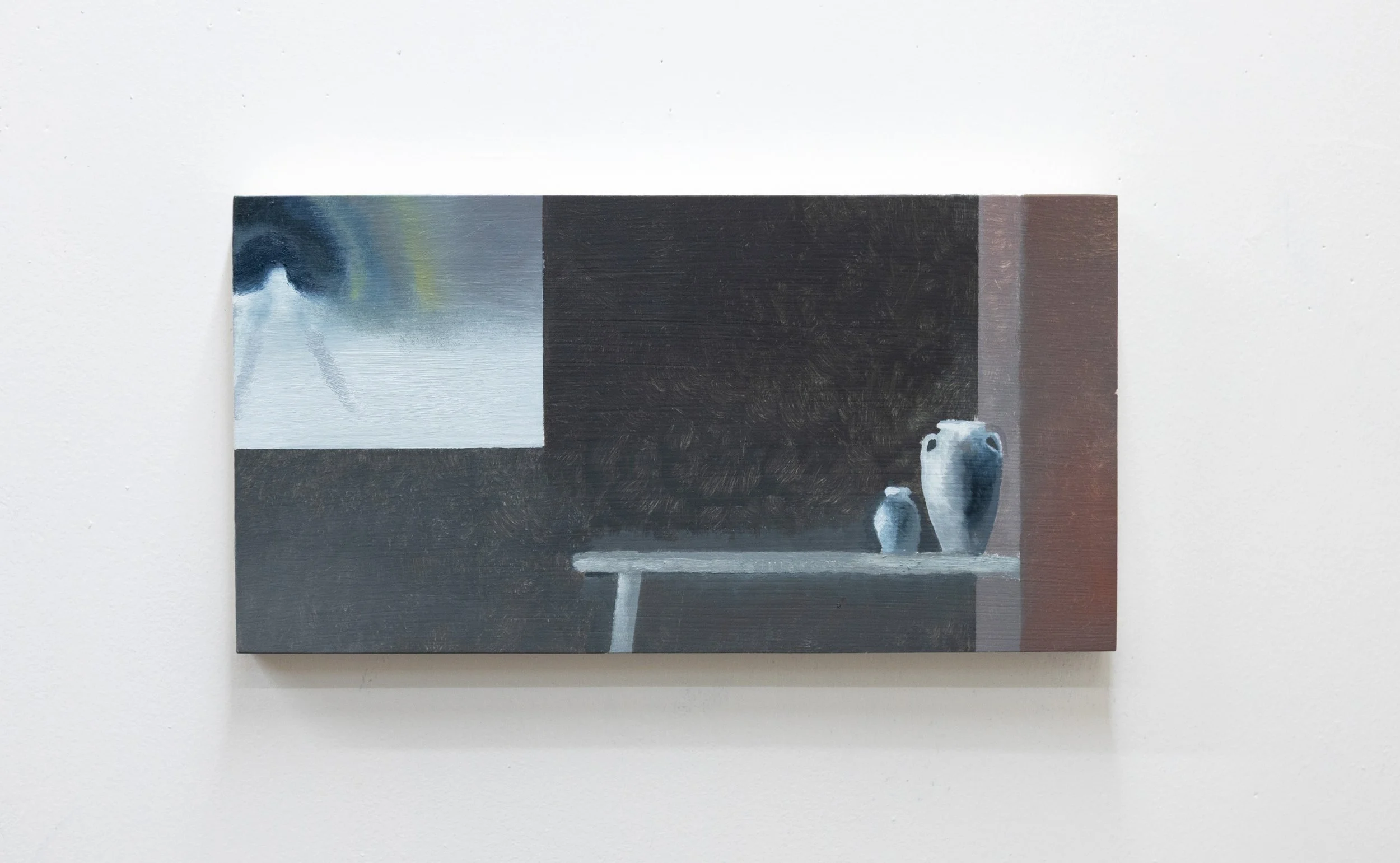
A room with no windows (1), 2025. Oil on panel, 6 x 12 inches.
Interview with William Matheson
Questions by Emily Carol Burns
Interview conducted October 2025
Hi William. Can you tell us a bit about your background and how you became interested in becoming an artist?
I grew up in a rural part of Oregon called Corbett. Environmentally it’s not dissimilar to Twin Peaks. As a teenager, I spent most nights slowly driving around the back roads and highways of the Columbia River Gorge. That early engagement with nocturnality, isolation, and the uncanny still undergirds my practice.
Like many artists, I started with drawing, learning from comics, manga, and anime as a child. I later got into oil painting when I was 12–13. I copied old master paintings from Durer, Raphael and Botticelli.
Who or what were some of your most important early influences?
When I was 14, I saw Gas by Edward Hopper at the MOMA. I spent an hour looking at it. I remember being captivated by the thin strip of light coming out of the gas station that almost reaches the gas attendant and the dense, darkening forest. Forests like this are present in many of Hopper’s best paintings. The painting is very natural but also very peculiar and unnerving.
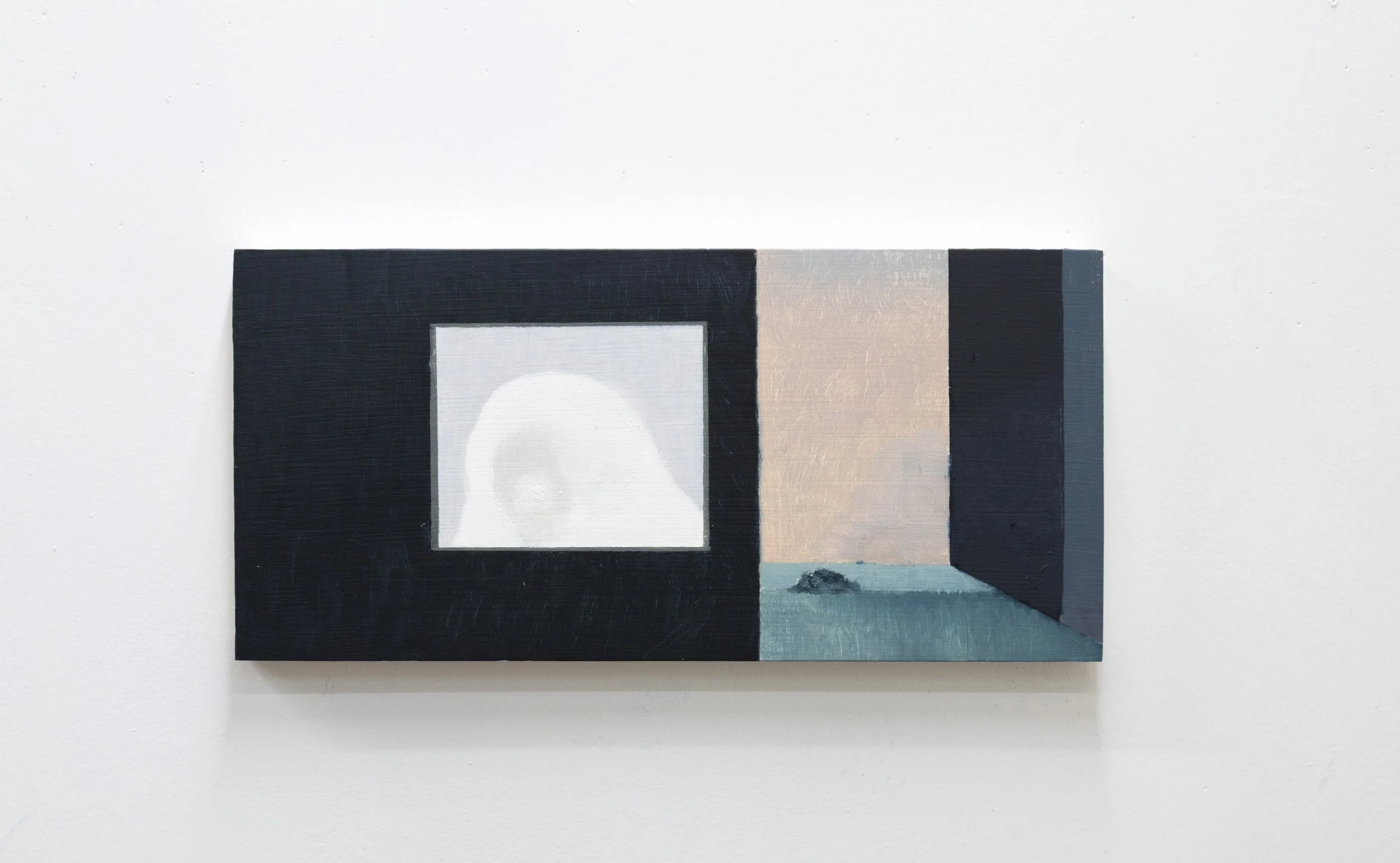
A room with no windows (2), 2025. Oil on panel, 6 x 12 inches.
Where are you currently based and what initially attracted you to working in this place?
I live in Portland. My wife and I moved back to Oregon in 2018 for work. Prior to that we lived in Richmond VA where I went to school at Virginia Commonwealth and then taught as an adjunct professor for several years.
I love the access to nature here—there are so many amazing running and hiking trails.
Are there any aspects of this specific location or community that have inspired aspects of your work?
This isn’t a positive aspect of my location, but the wildfires, smoke and haze that now mark summers here have become recurring elements in my paintings. The color and atmosphere of smoke—its presence as both a visual and existential specter—has deeply shaped my palette and the emotional tone of my recent work.
On a more positive note the community and art scene in Portland are very pleasant. It’s low key, but there are a lot of artists here and the environment is supportive.
Can you describe your studio space? What are some of the most crucial aspects of a studio that make it functional?
My current studio is a small building behind our house, at the end of our backyard. This is the first home studio I’ve had that’s worked well for me. There’s a degree of separation between home life and studio, but it’s also incredibly easy to access. I usually visit the studio multiple times throughout the day.
I love being in the studio at night. It acts as a beacon because it's brightly fluorescently lit. When I’m working inside the studio, I can't see outside at all. There's this interesting tension. I know what's outside of course— the backyard which I engage with all the time—but also during that time on some deeper level, I don't. I think I intentionally cultivate these kinds of spaces where you exist with the unseen.
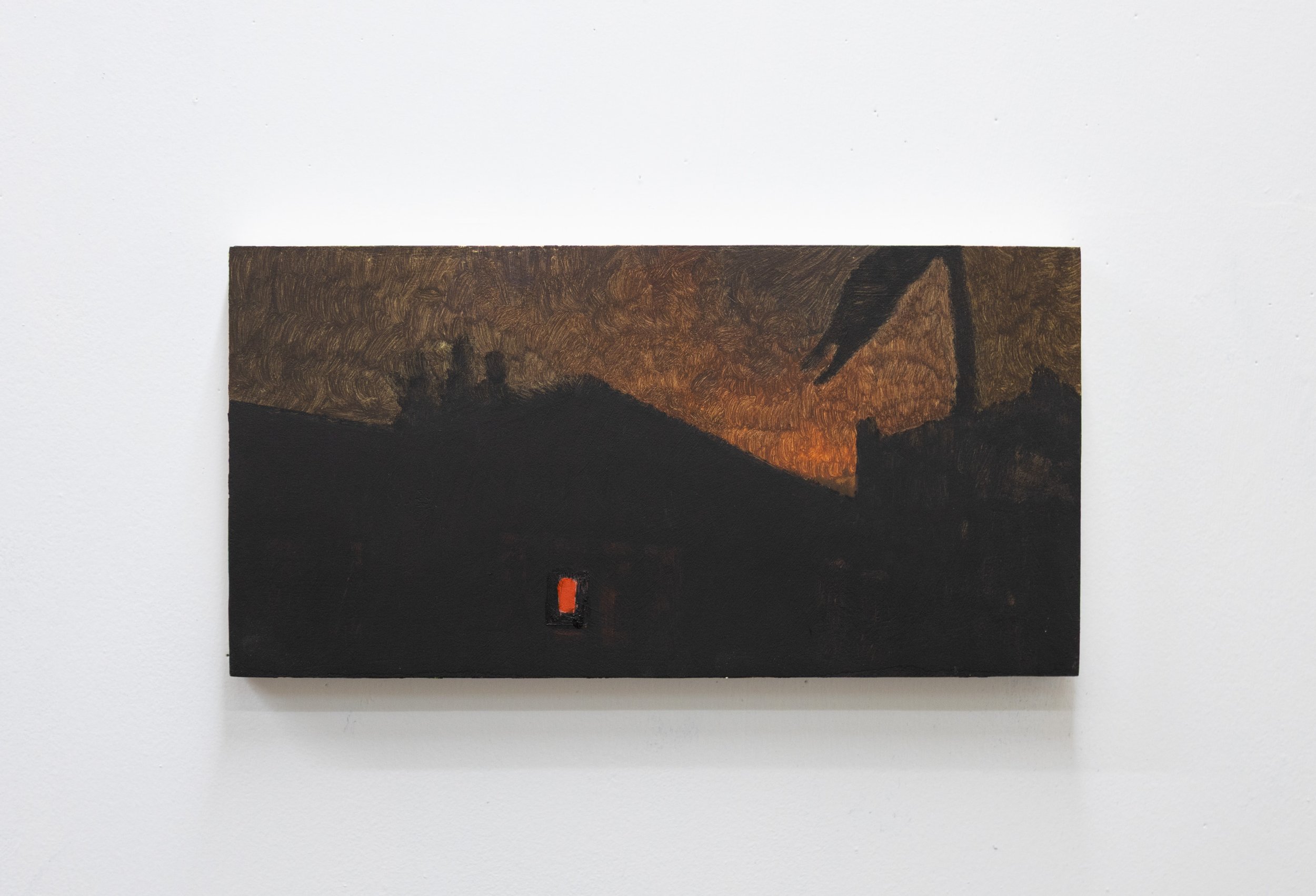
A house with no doors (1), 2025. Oil on panel, 6 x 12 inches.
What are you working on in the studio right now?
I’m working on a mixture of very small paintings on wood panel (all in the 6–12 inchrange) and larger paintings on canvas with collaged elements. One of the benefits of having a variety of types of materials in the studio—linens, jutes, burlaps, is that I end up with a lot of scraps or unusable smaller strands. I’ve been collaging these pieces onto my canvas with gesso to create different textural fields to break up compositions.
What are the primary themes of your work right now?
My work centers on the immaterial and the spectral—sunlight, shadows, smoke—elements that are rooted in the everyday, yet can easily slip into the uncanny or menacing.
What is on your mind a lot recently?
I spend most of my time thinking about my daughter and the future.
What is a typical or ideal day like?
I have a three year old daughter in preschool, so early mornings and afternoons are spent playing and creating with her. I’m an avid runner and I’m usually training for a marathon or trail race. I usually try to run in the morning. I find that my creative focus and energy are stronger on days when I run. I try to carve out several hours of creative work in the morning after a run, or in the evening after putting my daughter to bed. Sometimes I patch a studio day together in multiple small sections.
I work as an operations coordinator for an EV charging company. The position’s fully remote and I often work on the desktop inside my studio. Both consciously and subconsciously, it allows me to engage with my paintings, and spend time with the work and explore possibilities. I spend a lot of time in the studio where I’m not working creatively, but still looking.
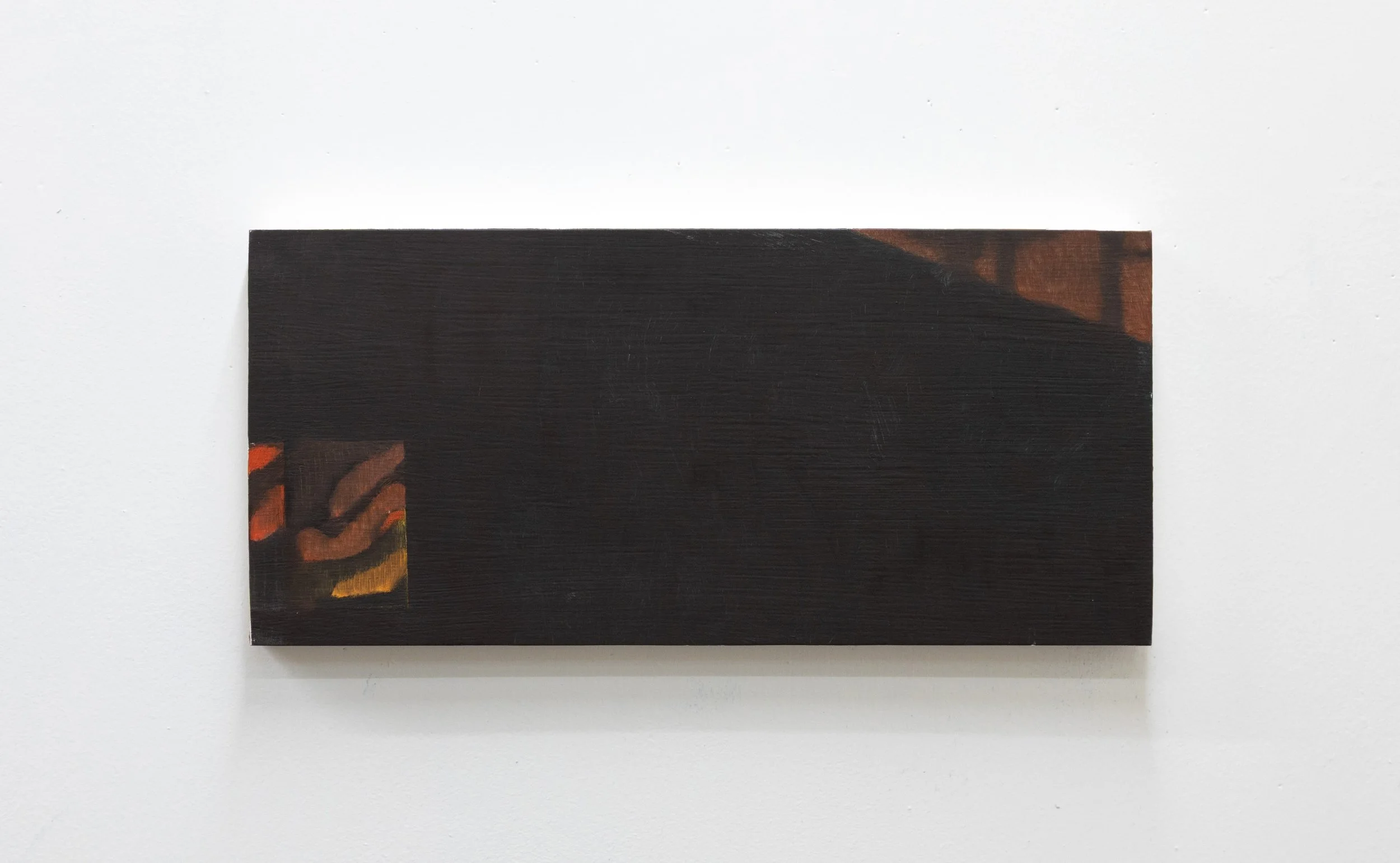
A house with no doors (2), 2025. Oil on panel, 6 x 12 inches.
What criteria do you follow for selecting materials?
I always paint with oil paint and Gamsol. Lately I‘ve either gravitated towards smooth surfaces like panel, or coarser materials such as burlap, jute and linen which have an earthier/rougher quality than traditional canvas. There are small crevices and gaps between the weave of the fibers that create tension between the representational images and the materiality of the surface.
Can you walk us through your overall process?
My paintings are usually informed by intuitive amalgamations of images that I’ve photographed, drawn, collected or found. Often I’ll collage together sources in photoshop and use that as the starting point for a composition. By the time I’m close to completing a painting it will usually have strayed dramatically from the composition of the original source, but I like having that initial reference point tied to the act of collecting and accumulating imagery. I’ve always loved the ability to seamlessly meld disparate threads and make them cohesive. Elements as unrelated as the color of wildfire smoke in summer, a shadow at night, an image from an art history book or a generic image found online, all take equal weight and can be transformed to underscore the themes I work with.
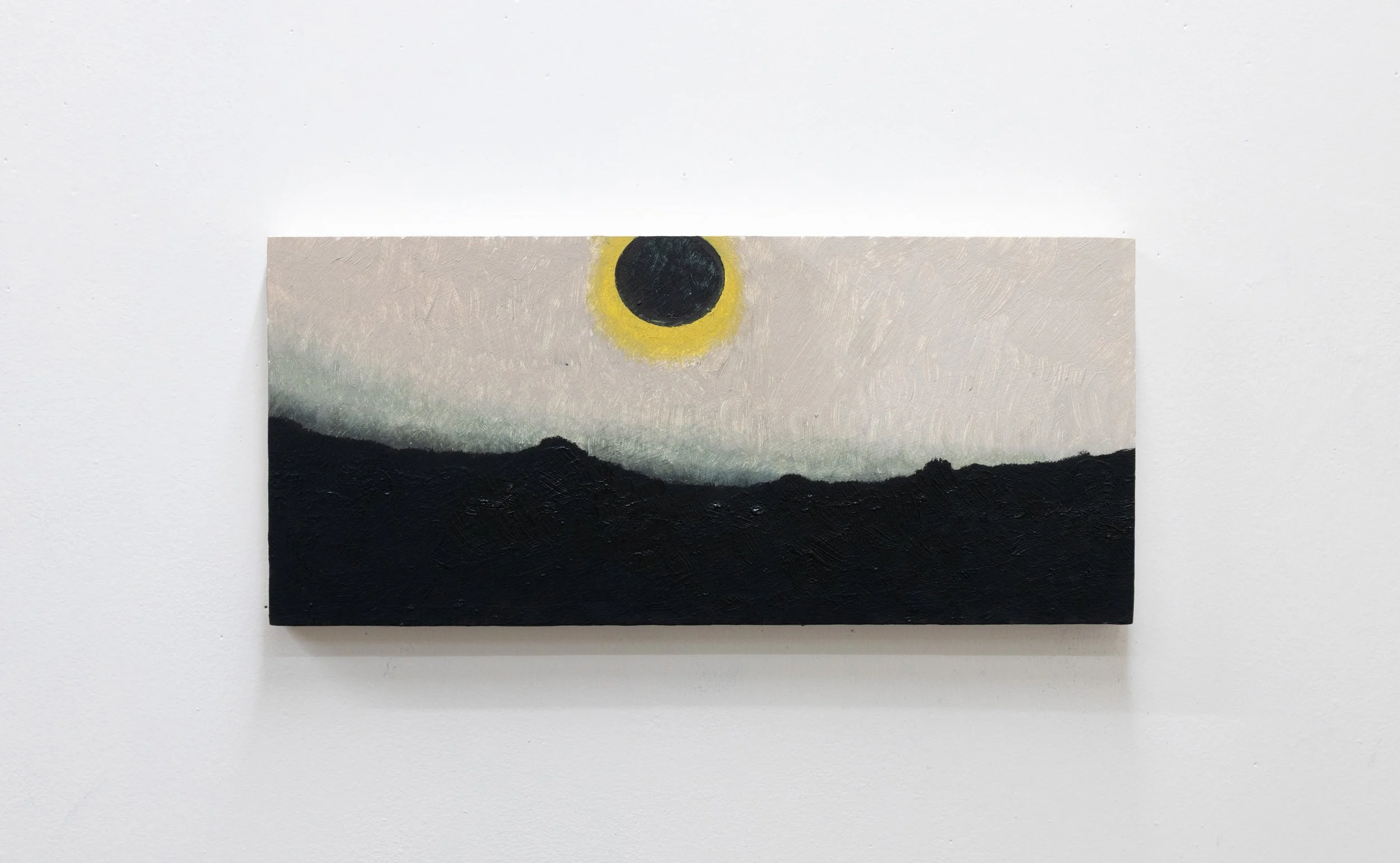
Black sun (2), 2025. Oil on panel, 6 x 12 inches.
Can you share some recent influences? Are there specific works—from visual art, literature, film, or music—that are important to you?
I love late Gothic and early Renaissance painters—artists like Duccio, Sassetta, and the Master of the Osservanza. Their approach to space is uncanny, with figures that both belong to and resist their environments. There is, for lack of a better word, a dreamlike quality to the imagery and this deep tension in how figures exist in space—as if the environment in the canvas or panel exists in a state of understated impossibility, that the figure both resists and is also enveloped by. I think about this sort of simple spatial tension frequently when creating work.
In recent years my work has been inspired by early climate fiction like Anna Kavan’s Ice, Marlen Haushofer’s The Wall and Guido Morselli’s Dissipatio H.G. Each captures the strangeness and precarity of life in the Anthropocene and their use of uncanny, climate-related imagery has influenced many of my paintings. From the usage of unnatural colors and light, to the placement of specific symbols, much of my work draws direct throughlines to them.
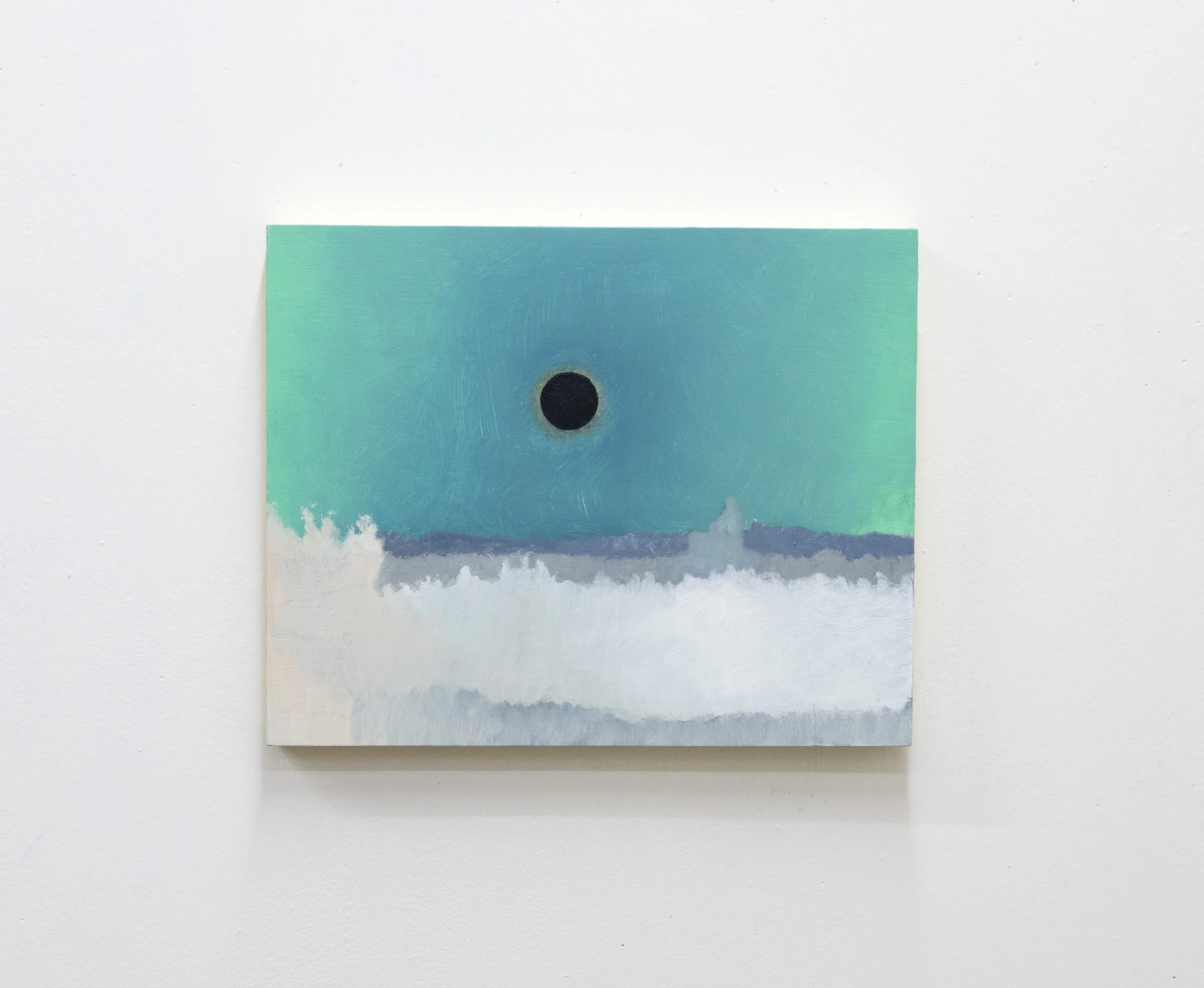
Black sun (1), 2025. Oil on panel, 8 x 10 inches.
Who are some contemporary artists you’re excited about?
David Byrd,Lois Dodd, Andrew Cranston, Miriam Cahn, Merlin James and Michael Armitage. Each of them approaches figurative painting with a strangeness and simplicity that I find inspiring.
Do you have any tips or advice that someone has shared with you that you’ve found helpful?Consistency.The most helpful advice I’ve received is to continually show up and to create even when the work feels pointless or uncertain.
What’s coming up next for you?
My work will be featured next year in a painting publication that I can’t announce yet, but am very excited about.
In grad school I did a lot of video work and recently I’ve been revisiting some of these processes. I’m working with hand processing super 8 film with caffenol which has been exciting. Caffenol causes unexpected warps and distortions which can make the filmic process, for lack of a better word, very painterly.
Thank you so much for sharing your work and talking with us!
To find out more about William and his work, check out his website.