
Karen Azarnia
My work operates at the intersection of domestic and natural environments. Through painting I explore notions of time, home, memory, and natural life cycles. I am interested in the different genres of painting as a means to reposition them within art history. The landscape genre has long been tied to the feminine. I am interested in mining this territory as a means to reclaim the landscape for the female gaze, as a site for healing and care. My latest Verdant series depicts images of plants and ferns that recall memories of home. They are meant to be lush and generous – to inspire pleasure, renewal, and resilience – as an act of generosity and care towards the viewer. For me, the meditative rhythms found in nature, the human experience, and painting are full of complexity, often contain paradox, and at the same time hold the potential to locate wonder.
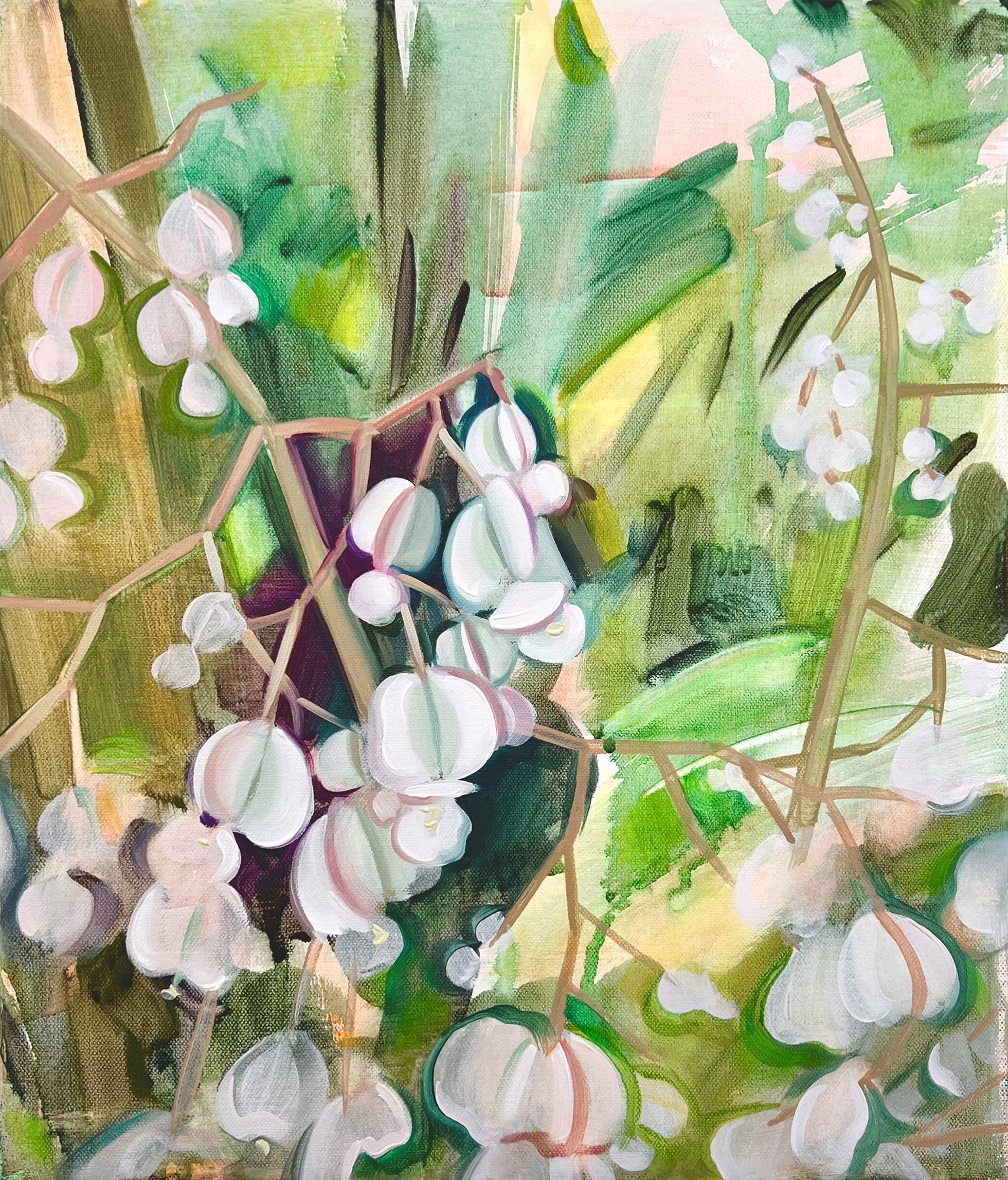
After the Rain, 2025. Oil and acrylic on canvas, 14 x 12 inches
Interview with Karen Azarnia
November 2025
Hi Karen! Can you tell us a bit about your background and how you became interested in becoming an artist? Who or what were some of your most important early influences?
I’m an Armenian-American artist born and raised in Miami, FL. At an early age I discovered world-making, and art became an important way for me to process personal experiences and the environment around me. My mother was a nurse and my father a scientist. Collectively they taught me to slow down and look carefully at the world around me, with empathy – ways of seeing. My undergraduate training was fairly traditional – working my way through the figure, portrait, and landscape. Grad school was about pulling abstraction and invention into the work. These days I am interested in the genres of painting as a means to reposition them within a contemporary context.
Where are you currently based and what initially attracted you to working in this place? Are there any aspects of this specific location or community that have inspired aspects of your work?
I came to Chicago for graduate school and have been here ever since. It has a vibrant community of creatives that is incredibly supportive. The physical landscape in the Midwest has also been important. Growing up in Miami, I didn’t experience the four seasons the same way you do here. It’s given me a greater sense of the passage of time, and slowly revealed complex overlapping rhythms between nature, the human experience, and the act of painting.

Verdant, 2023. Oil and acrylic on canvas, 12 x 9 inches
Can you describe your studio space? What are some of the most crucial aspects of a studio that make it functional? Do any of these specific aspects directly affect your work?
My studio is fairly typical – white walls, gray floors – but when I first set eyes on the space I was enamored with the large set of windows that let in tons of natural light. Not only does it help me see the work better, but growing up in Miami daylight is essential to me. I also realized that the position and quality of light mimics a certain group of windows from my childhood home. I spent a lot of time looking out those windows at the landscape. The light pouring through my studio windows is something intimate and familiar.
What are you working on in the studio right now?
I’ve taken my recent Verdant series and am in the process of scaling the work up. It shifts the viewer’s relationship to the piece, from something small and intimate to a sensation of being enveloped, a feeling of existing within the landscape.
What are the primary themes of your work right now?
The work has layers of meaning. I think about being in conversation with the landscape and looking carefully, rather than trying to dominate it. The genre of landscape has long been tied to the feminine, and I seek to mine this territory as a means to reclaim the landscape through the female gaze. I’m interested in the way nature holds immense potential to heal, it’s resilience and strength. The relationship between abstraction and representation in my work speaks to navigating tension and trying to achieve balance: with the natural world, with personal identity, with each other. The work also serves as a vehicle for personal emotive expression.
What is on your mind a lot recently?
Protecting our environment, saving our democracy. Spending time in the studio helps sustain me.
What is a typical day like? If you don't have a typical day, what is an ideal day?
After getting my kids ready for school, I head to class to teach or make my way to the studio. Once there I spend a lot of time looking, trying to figure out what the painting is telling me it needs. Having a great painting session – when it happens! – makes for an ideal day.
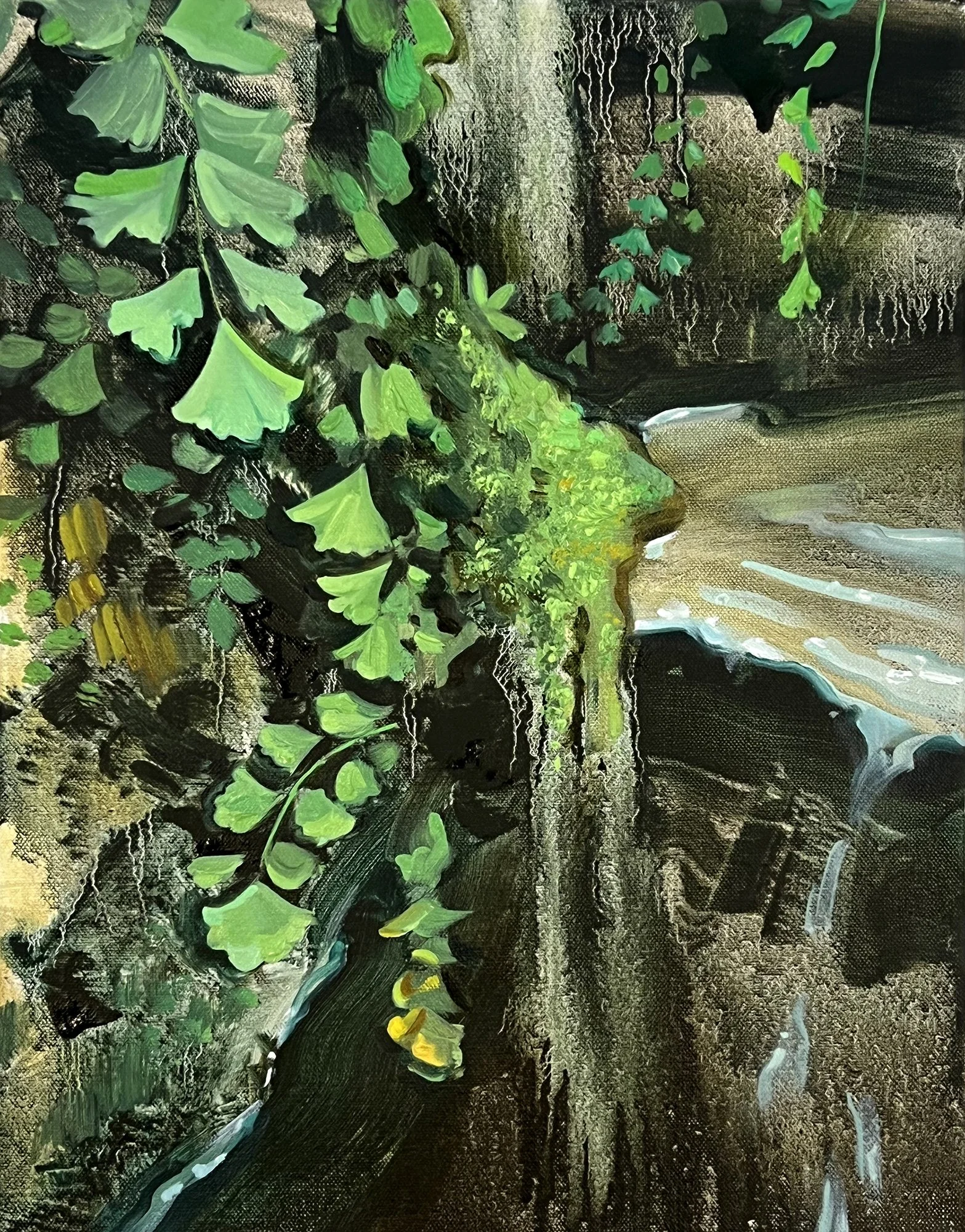
Dark Pool (after Neruda's Sonnet XVII), 2023. Oil on canvas, 14 x 11 inches
What gets you in a mindset conducive to making work?
Being present in the studio. Making a conscious effort to disconnect from the everyday distractions around us – of which there are many – to slow down, and give my full attention to the work in front of me. It’s a conversation, the work demands patience and attention.
What criteria do you follow for selecting materials? How long have you worked with this particular media or method?
I started working with oils a long time ago. There’s a specific quality to the surface, a richness of texture and history you can’t get with other materials. You can fake it to some degree, but it’s just not the same. There’s also a certain amount of pleasure that comes from working with the tactility of oil. I tend to work slowly through certain passages of a painting, and oils afford you time to work longer. It’s versatile.
Can you walk us through your overall process? How long has this approach been a part of your practice?
It begins with something I’ve seen in person. I don’t appropriate imagery because taking time to slow down and experience something for myself forms a relationship to the subject that is deeply personal. I usually take some photographs. They serve as documents that jog my memory once back in the studio. I’ll work with the reference – sometimes sketches and quick studies made from direct observation – up to a certain point and then put the source material away to work directly with the painting.
Can you talk about some of the ongoing interests, imagery, and concepts that have informed your process and body of work over time? How do you anticipate your work progressing in the future?
I’ve always been interested in themes of time, home, memory, and natural life cycles, and the different ways they overlap. While the landscape is my current focus at the moment, my previous work dealt more with the figure. Down the line I foresee the figure making its way back into the work in some way, in dialogue with the landscape.
Do you pursue any collaborations, projects, or careers in addition to your studio practice? If so, can you tell us more about those projects, and are there connections between your studio practice and these endeavors?
Along with painting, I teach and occasionally curate exhibitions. Both are excellent ways to connect with other creatives, to step outside of my own practice and be in conversation with other modes of production and ways of thinking.
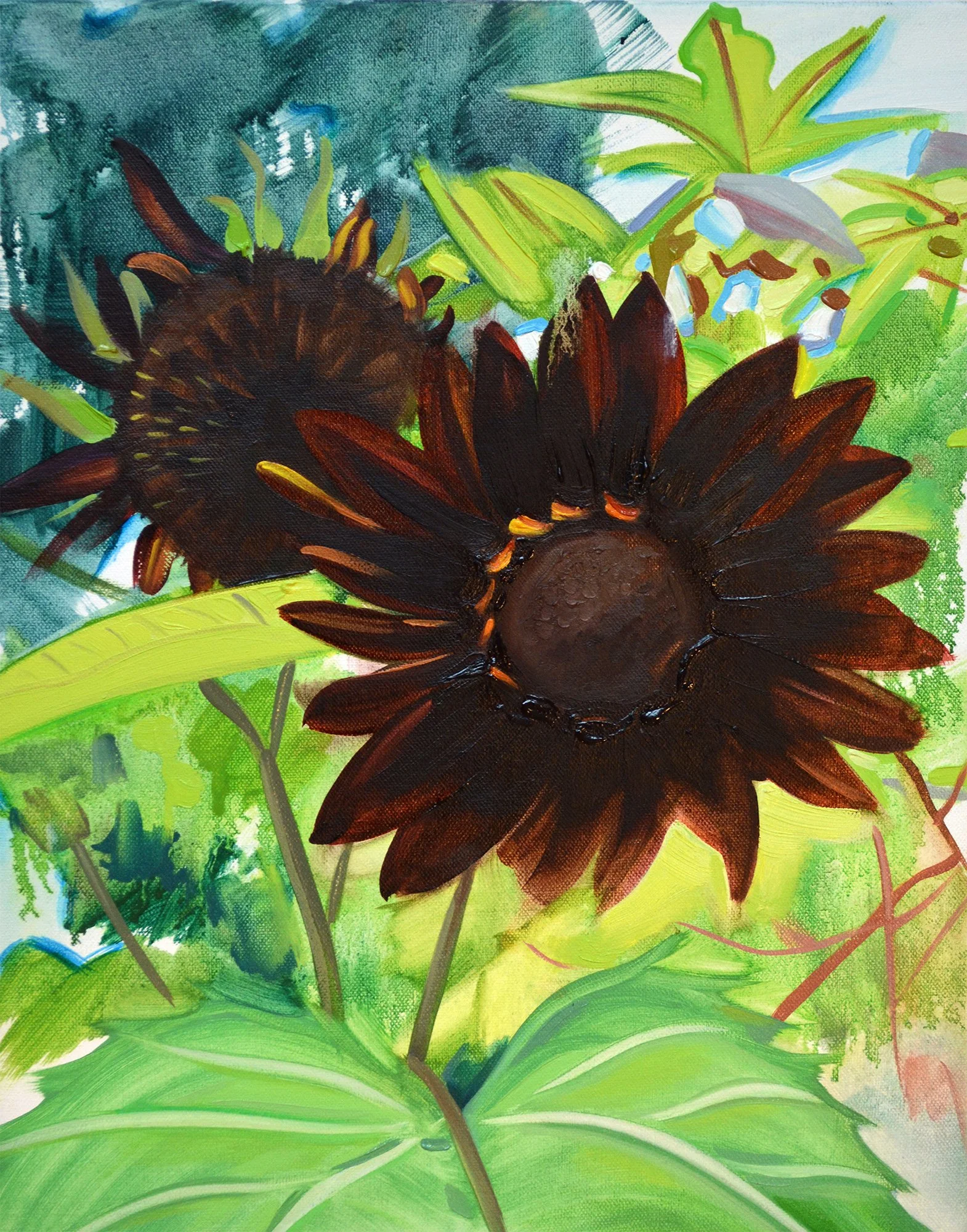
Peak Bloom, 2024. Oil on canvas, 14 x 11 inches
Can you share some of your recent influences? Are there specific works—from visual art, literature, film, or music—that are important to you?
Lately, I’ve been thinking about the poetry of Pablo Neruda. Also Braiding Sweetgrass, specifically the audio version narrated by author Robin Wall-Kimmerer. The ethereal figures of Eugene Carriere are always with me. The amazing work of Paula Modersohn-Becker resonates deeply with me, both as a woman and a mother.
Who are some contemporary artists you’re excited about? What are the best exhibitions you’ve seen in recent memory and why do they stand out?
There’s so many! Josephine Halvorson, Jordan Casteel, Eric Aho, Claire Sherman, and Elisabeth Condon just to name a few. Tenderheaded by Jennifer Packer at the University of Chicago’s Renaissance Society back in 2017 was a powerful exhibition that has stayed with me. Ellen Altfest’s Forever at the Frist Museum of Art, TN earlier this year was a testament to the power of looking.
Do you have any tips or advice that someone has shared with you that you have found particularly helpful?
I was once told that most important thing you can give someone is your time. Giving someone or something your full attention, looking deeply, can be a form of compassion. We need this now more than ever.
Thank you so much for taking the time to share your work and talk with us!
To find out more about Karen and her work, check out her website.